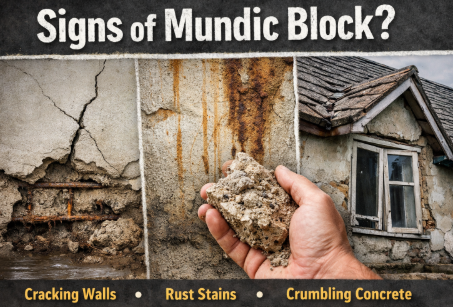
Common signs of mundic block include cracking walls, crumbling or soft concrete, rust-coloured staining, damp patches, and structural movement such as bowing walls or sagging floors. These issues are caused by chemical reactions within the material and often worsen over time, making a professional mundic test essential.
What Is Mundic Block? (Quick Overview)
Mundic block is a type of concrete made using mining waste, commonly found in properties built in Cornwall and parts of South West England between 1900 and the 1960s.
Why Mundic Block Deteriorates Over Time
Mundic block contains minerals such as pyrite (fool’s gold), sulphide compounds, and mining waste residues. When exposed to moisture and oxygen, these materials can react and produce sulphuric acid, leading to:
- Weakening of the structure
- Surface breakdown
- Internal decay
This process is known as mundic decay.
Key Signs of Mundic Block
1. Structural Cracking in Walls
One of the most common signs is visible cracking in internal walls, external blockwork, and around doors and windows. These cracks may:
- Widen over time
- Appear uneven
- Indicate deeper structural issues
2. Crumbling or Soft Concrete
Mundic block can lose its strength and become powdery, friable (easily broken), or sand-like in texture. In severe cases, walls may physically break apart.
3. Rust or Brown Staining
A very distinctive sign is rust-coloured staining on walls, caused by oxidation of sulphide minerals. This often appears as brown streaks or patchy discolouration.
4. Damp Patches That Don’t Go Away
Unlike normal damp issues, mundic-related damp:
- Persists even after treatment
- Appears in unusual areas
- Often accompanies structural damage
5. Structural Movement or Instability
More advanced signs include bowing walls, sagging floors, movement around window frames, and uneven surfaces. These indicate serious structural deterioration.
6. Hollow or Weak Sound in Walls
When tapped, mundic-affected walls may sound hollow, feel weak, or show signs of internal breakdown.
How Serious Are These Signs?
Mundic block deterioration is progressive, meaning it gets worse over time, structural integrity reduces, and repair costs increase. In severe cases, it can lead to unsafe living conditions, mortgage refusal, and significant property value loss.
When Should You Get a Mundic Test?
You should consider testing if:
- Your property was built between 1900–1960
- It is located in Cornwall or Devon
- You notice any of the signs above
- A survey flags unusual concrete
A mundic test involves core sampling, laboratory analysis, and classification grading. This is essential for mortgage approval and selling your property.
How These Signs Affect Mortgages
If mundic is confirmed, lenders will require a test report, and classification determines approval. Properties showing signs of mundic block may drop to 65–70% of normal value, attract fewer buyers, and be limited to cash buyers.
Can You Sell a Property with Mundic Block?
Yes — but it depends on severity. The best approach is to get a mundic test early, be transparent with buyers, and adjust pricing accordingly.
Where Mundic Block Is Most Common
Mundic block is mainly found in Cornwall, West Devon, and South Devon, especially in homes built before the 1960s.
Frequently Asked Questions
What are the early signs of mundic block?
Cracking walls, rust staining, and soft or crumbling concrete are the most common early indicators.
How can I tell if my house has mundic block?
A professional mundic test is required, but visible signs like cracking, damp, and structural movement can indicate risk.
Is mundic block dangerous?
In severe cases, yes. It can compromise structural integrity and make a property unsafe.
Do all mundic properties show visible signs?
Not always. Some issues are internal, which is why testing is essential.



Get Free Local Property Insights
Thinking of buying or selling? Get area-specific advice tailored to your needs.