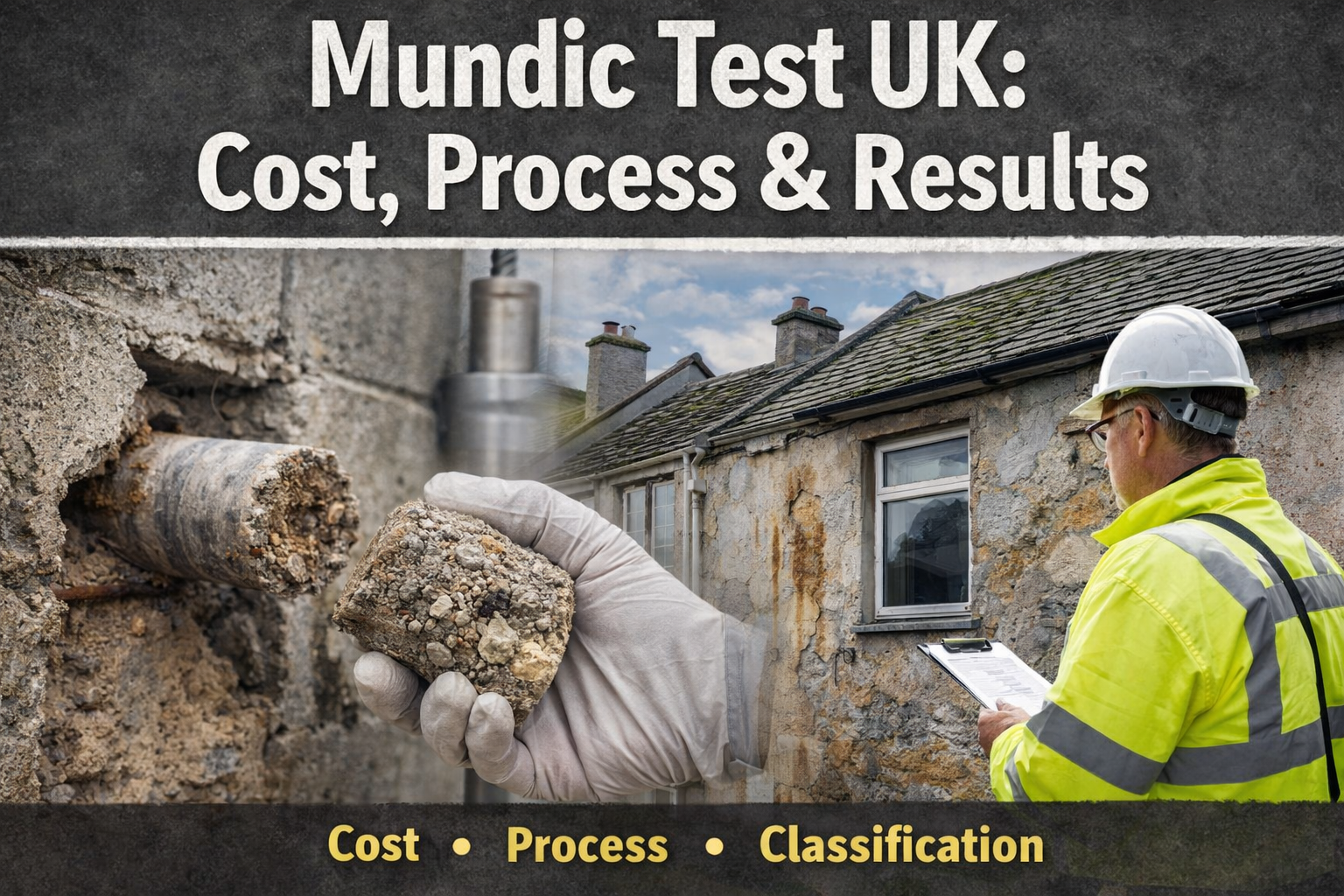
A mundic test is a specialist survey used to determine whether a property contains mundic block and assess its structural condition. It involves drilling core samples from walls or foundations, laboratory analysis, and assigning a classification grade that affects mortgage approval and property value.
What Is a Mundic Test?
A mundic test is a professional inspection and laboratory analysis carried out on properties suspected of containing mundic block. It is most commonly required for:
- Properties built between 1900–1960
- Homes located in Cornwall and South West England
Why Is a Mundic Test Important?
A mundic test is essential because it determines whether the property is structurally safe, if it is eligible for a mortgage, and its impact on property value. Without a test, buyers may pull out and lenders may refuse finance.
How Does a Mundic Test Work?
The process is typically carried out in stages:
1. Initial Screening Test
- Visual inspection of the property
- Identification of suspicious materials
2. Core Sampling
- Surveyor drills into walls or foundations
- Small samples of concrete are extracted
3. Laboratory Analysis
- Samples tested for mineral composition and structural integrity
4. Classification Report
The property is graded based on results. This report is used by lenders and buyers.
Mundic Test Results Explained
This is the most important outcome of the test:
| Classification | Meaning | Mortgage Impact |
|---|---|---|
| A1 / A2 | Safe | Approved |
| A3 | Minor issues | Conditional approval |
| B | Moderate risk | Limited lenders |
| C / C1 | Severe deterioration | Usually unmortgageable |
The result directly affects mortgage approval, property value, and saleability.
Mundic Test Cost UK
The cost of a mundic test typically ranges between £250 – £600+. Factors that affect the cost include:
- Number of core samples required
- Property size
- Complexity of testing
- Laboratory analysis fees
Who Pays for a Mundic Test?
- Seller pays (most common — to reassure buyers)
- Sometimes shared between buyer and seller
- Buyers may request it before purchase
Getting a test early can speed up the sale significantly.
Mundic Test in Cornwall
Mundic testing is most common in Cornwall, West Devon, and South Devon. In these areas, surveys often flag mundic risk and lenders frequently require testing before approving finance.
How Mundic Test Results Affect Mortgages
Mortgage lenders rely heavily on mundic test reports:
- A1 / A2 → Approved by most lenders
- A3 → Some lenders accept with conditions
- B / C → Often declined
Can You Sell a Property Without a Mundic Test?
Technically yes — but it is risky. Without a test, buyers may lose confidence, sales may fall through, and mortgage issues can arise. A test provides transparency, buyer confidence, and faster transactions.
What Happens After a Mundic Test?
If classified A1–A3: The property is generally safe and a mortgage is possible.
If classified B or C: Repairs may be needed, property value drops, and the property may be limited to cash buyers.
Frequently Asked Questions
How much does a mundic test cost?
A mundic test typically costs between £250 and £600+, depending on the property and number of samples required.
How long does a mundic test take?
The process usually takes a few days, including sampling and laboratory analysis.
Is a mundic test required for a mortgage?
Yes, most lenders require a mundic test report for affected properties.
What is a positive mundic test?
A positive result indicates the presence of mundic material, which may affect structural integrity and mortgage eligibility.
Can you sell a house without a mundic test?
Yes, but it is harder to sell and may lead to delays or reduced offers.



Get Free Local Property Insights
Thinking of buying or selling? Get area-specific advice tailored to your needs.