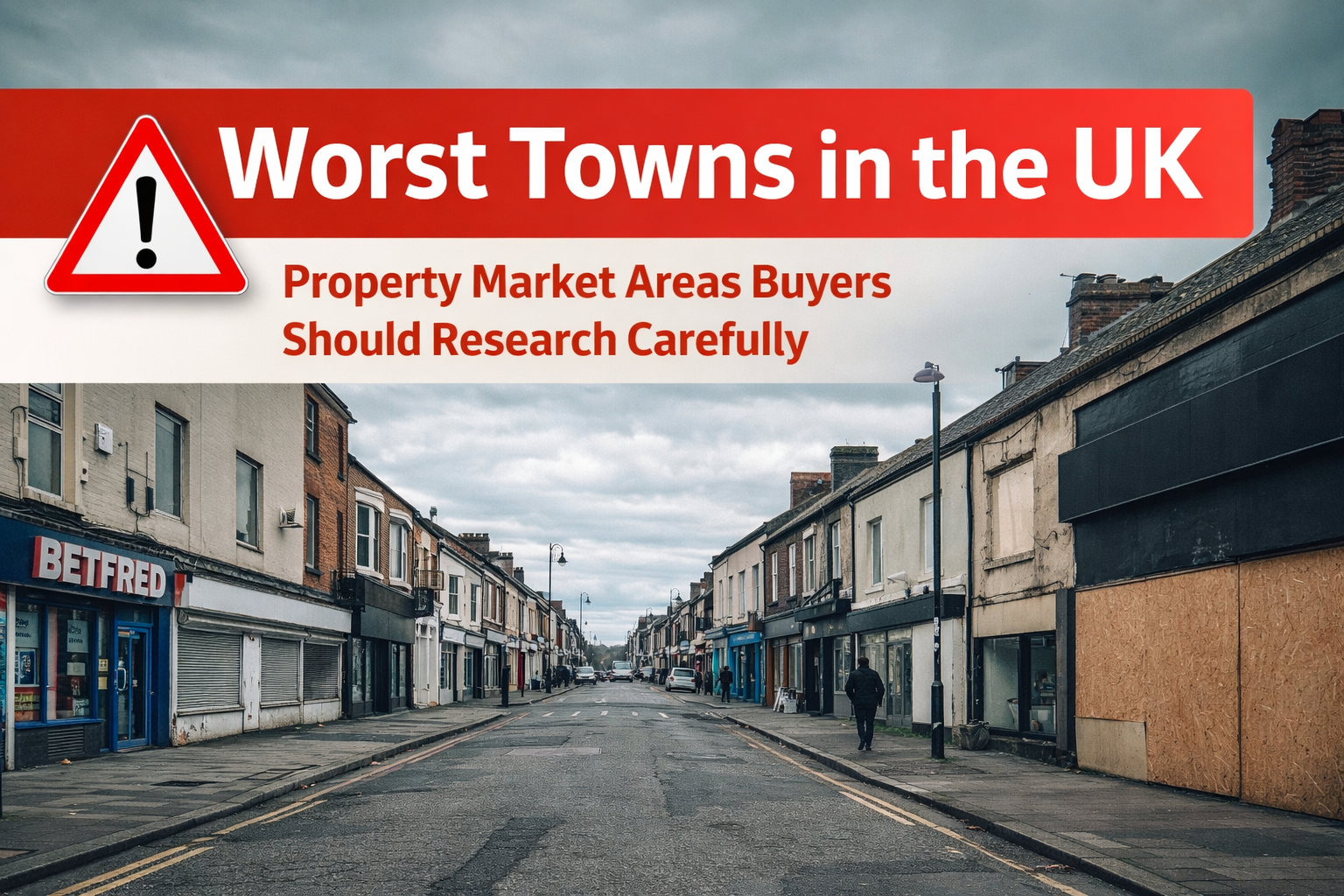
Choosing the right location is one of the most important decisions when buying property. While some areas benefit from regeneration, employment growth and strong housing demand, others regularly appear in discussions about the worst towns in the UK from a property market perspective.
This does not necessarily mean these places are bad to live in. Instead, it reflects factors such as slower price growth, weaker rental demand, infrastructure limitations or employment risks that can affect long-term property performance.
Understanding which locations are sometimes associated with the worst towns to live in UK or the worst cities to live in England can help buyers, landlords and sellers make more informed decisions.
Why Some Areas Are Considered the Worst Towns in the UK for Property Investment
Property values tend to perform best where three key fundamentals exist: strong employment opportunities, reliable transport connections, and sustainable housing demand. When one or more of these weaken, an area may begin appearing in discussions about the worst towns in the UK for investment performance.
Common warning signs include:
- Limited job market diversity
- Reduced infrastructure investment
- Affordability ceilings compared with wages
- Declining rental demand
- Oversupply of certain property types
These indicators don’t automatically make a location unsuitable — but they do increase risk for investors.
South East Commuter Belt Areas with Affordability Pressure
The South East has historically been one of the strongest housing markets in Britain. However, high prices in some commuter towns mean affordability has become stretched compared with local earnings.
As a result, some locations in the region are occasionally included in discussions about the worst towns to live in UK from an investment-growth perspective. This is mainly because:
- Entry prices are already high
- Transaction costs can be significant
- Short-term growth potential may be slower
Despite this, many South East towns remain attractive places to live — particularly for commuters working in London.
Coastal Holiday-Let Locations with Seasonal Demand Risk
Coastal towns across the South West and parts of Wales became extremely popular with short-term investors in recent years. However, property markets that rely heavily on tourism can experience fluctuations depending on travel trends and seasonal demand.
Challenges sometimes affecting these areas include:
- Limited year-round employment opportunities
- Seasonal rental income variation
- Transport connectivity issues
- Slower long-term capital growth
Ultra-Cheap Property Towns Offering High Yields but Higher Risk
Low-priced housing markets often attract investors looking for strong rental yields with smaller deposits. However, headline returns can sometimes hide underlying risks.
Common issues reported in these areas include:
- Older housing stock requiring repairs
- Lower tenant affordability
- Higher management demands
- Slower recovery during market downturns
For this reason, some investors approach these markets cautiously, which is why they sometimes appear in discussions about the worst towns in the UK for beginners entering buy-to-let property.
Prime Central London Locations with Slower Capital Growth Cycles
Prime central London remains one of the world’s most recognisable property markets. However, high-value neighbourhoods sometimes move through longer adjustment cycles compared with other parts of the country.
Factors affecting performance at the luxury end of the market include:
- Taxation changes affecting investors
- Shifts in international buyer demand
- Affordability pressure at higher price points
Areas with Complex Landlord Regulations
Changes to tenancy rules and landlord compliance requirements can influence where investors choose to buy property. Some regions with evolving regulatory frameworks are sometimes included in conversations about the worst towns to live in UK from a landlord strategy perspective. This reflects investment complexity rather than quality of life.
Single-Industry Employment Towns with Market Volatility Risk
Some towns depend heavily on one employer or industry sector, such as defence manufacturing, oil and energy industries, or automotive production. If employment demand changes suddenly, housing demand can also shift quickly. This is why these locations are sometimes included in research discussing the worst cities to live in England from a property-market resilience perspective.
Why These Places Are Not Necessarily the Worst Places to Live
It’s important to separate lifestyle rankings from property performance indicators. Many locations mentioned in discussions about the worst towns in the UK remain excellent places for families, commuters, retirees, and first-time buyers. However, property investors often look at different indicators than homeowners when choosing where to buy.
Areas Buyers and Investors Often Compare Instead
Locations with strong employment growth and regeneration investment tend to attract consistent housing demand.
North West England
Cities such as Manchester and Liverpool continue to benefit from infrastructure improvements and employment expansion.
Yorkshire
Leeds and Sheffield attract both renters and buyers due to affordability advantages and economic activity.
Midlands
Birmingham and surrounding commuter towns remain popular because of business investment and transport upgrades.
Because of these strengths, investors frequently prioritise these areas instead of locations sometimes described among the worst towns in the UK.
What This Means for Buyers and Sellers
Understanding regional housing trends helps both buyers and sellers make smarter decisions.
If you are buying property:
- Review employment growth trends
- Check infrastructure development plans
- Compare affordability levels
- Assess rental demand
If you are selling property in a slower-growth area, accurate pricing and presentation become especially important. Awareness of locations sometimes listed among the worst towns to live in UK helps sellers position their property more effectively in the market.
Final Thoughts
Property performance varies significantly across the country, and choosing the right location remains one of the most important factors affecting long-term results. Rather than focusing only on hotspots, buyers should also understand which areas are sometimes included in discussions about the worst towns in the UK, the worst cities to live in UK, and the worst cities to live in England from a property-market perspective.
Avoiding structural risk is often just as valuable as identifying future growth opportunities.



Get Free Local Property Insights
Thinking of buying or selling? Get area-specific advice tailored to your needs.